Christmas gifts your whole team actually wants
Christmas sorted in minutes. No addresses, no spreadsheets, no post office runs. Every recipient picks the gift they actually want. Register to get notified when it's time to tick Christmas gifts off your list.







How Huggg makes Christmas easy
Book a discovery callCorporate Christmas gifts, sorted
Send Christmas gifts to your whole team in minutes, not days. Everyone picks their own gift from a curated range, so nobody ends up disappointed. Set the budget, write a message, hit send. That's it.
No logistics, no spreadsheets. Just Christmas gifting sorted by lunch.
Christmas gifts for every kind of team


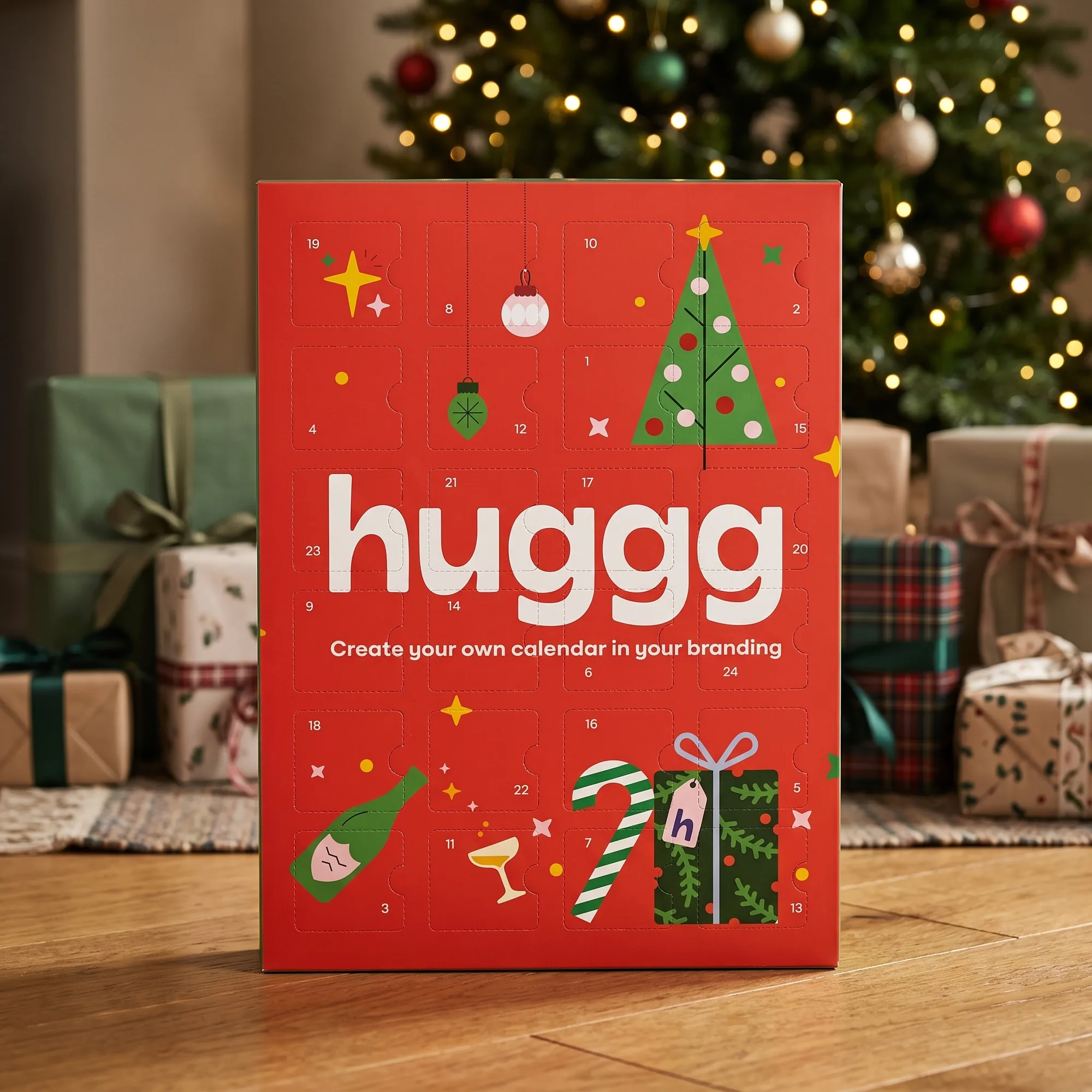
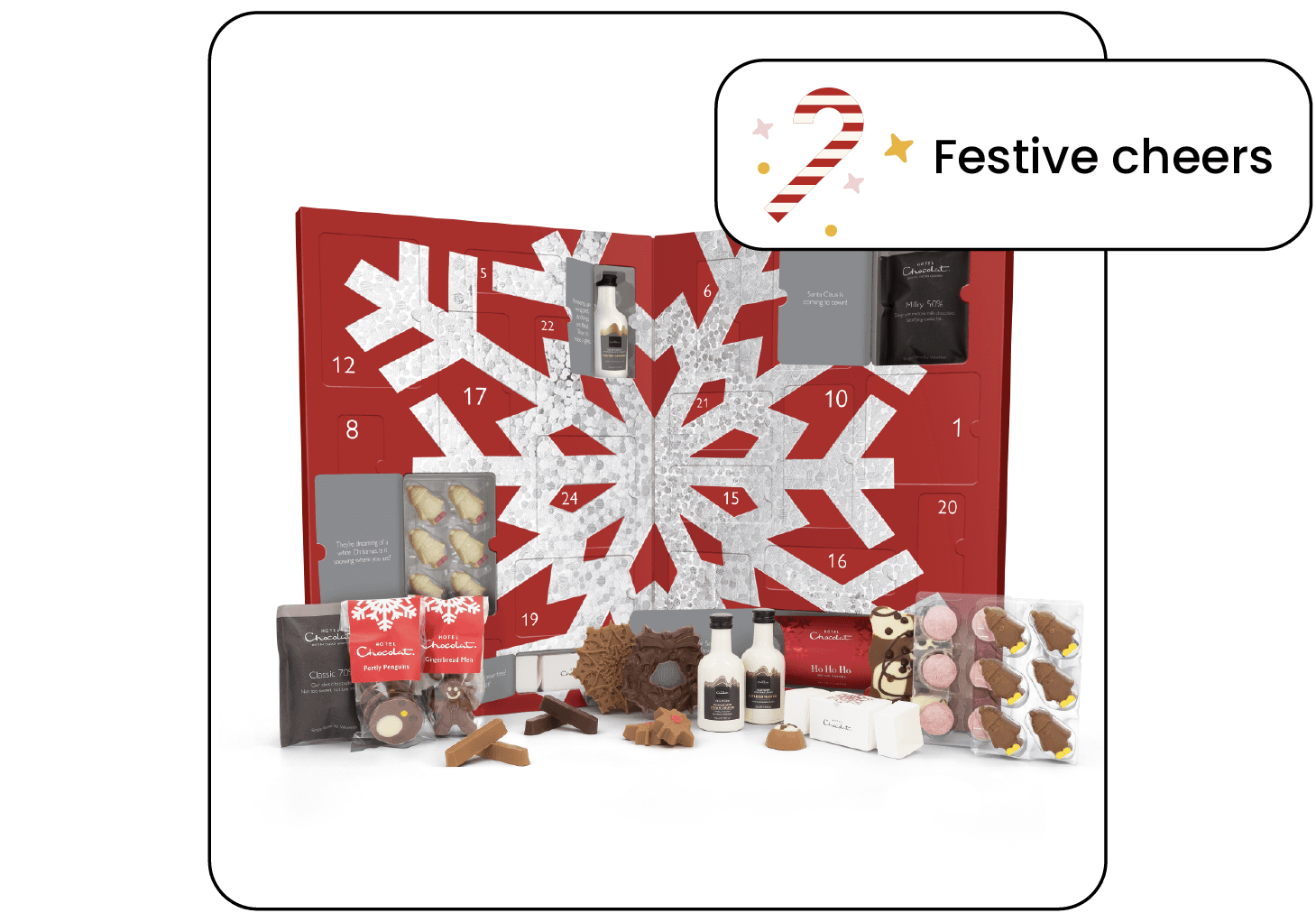
Branded advent calendars for your team
Put your brand on all 24 doors. Fully wrapped calendars in your colours, with milk or vegan dark chocolate inside and a recyclable tray and outer box. Sign off needed by 26th October.
Whether you're sorting Christmas for 30 people or 3,000
You have enough on in December. Set a budget, upload your team list, and Huggg handles the rest. Track redemptions in real time. Stay inside the £50 trivial benefit rule without thinking about it.
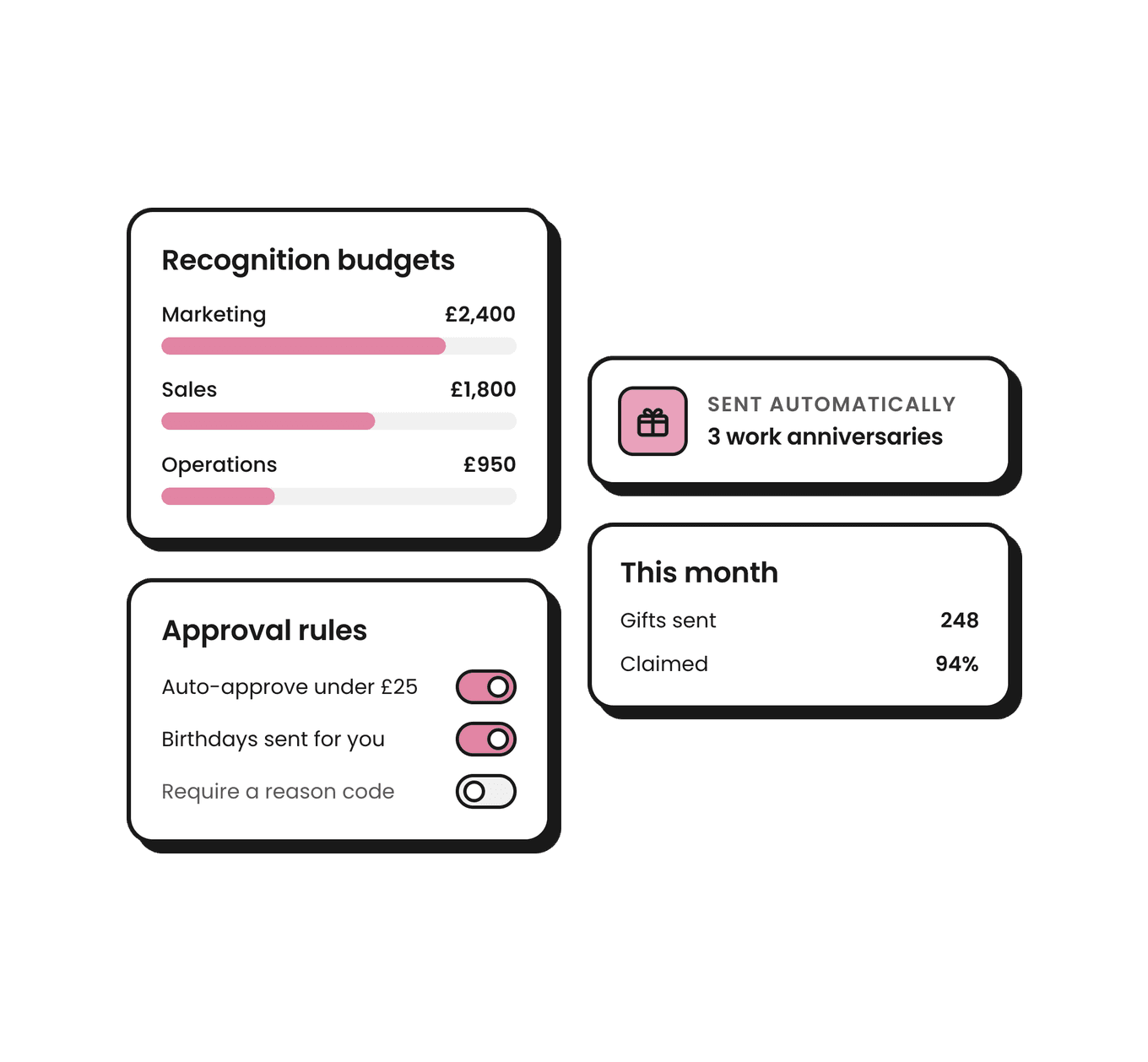
No chasing addresses. No post office runs. No spreadsheet of who got what. Upload your list, send the gifts, and get on with your other 47 December jobs. Most teams are done in under five minutes.

Add your logo, brand the gift message, and give clients something that reflects well on you. Every recipient picks the gift they want, so the impression lasts longer than the wicker basket would have done.
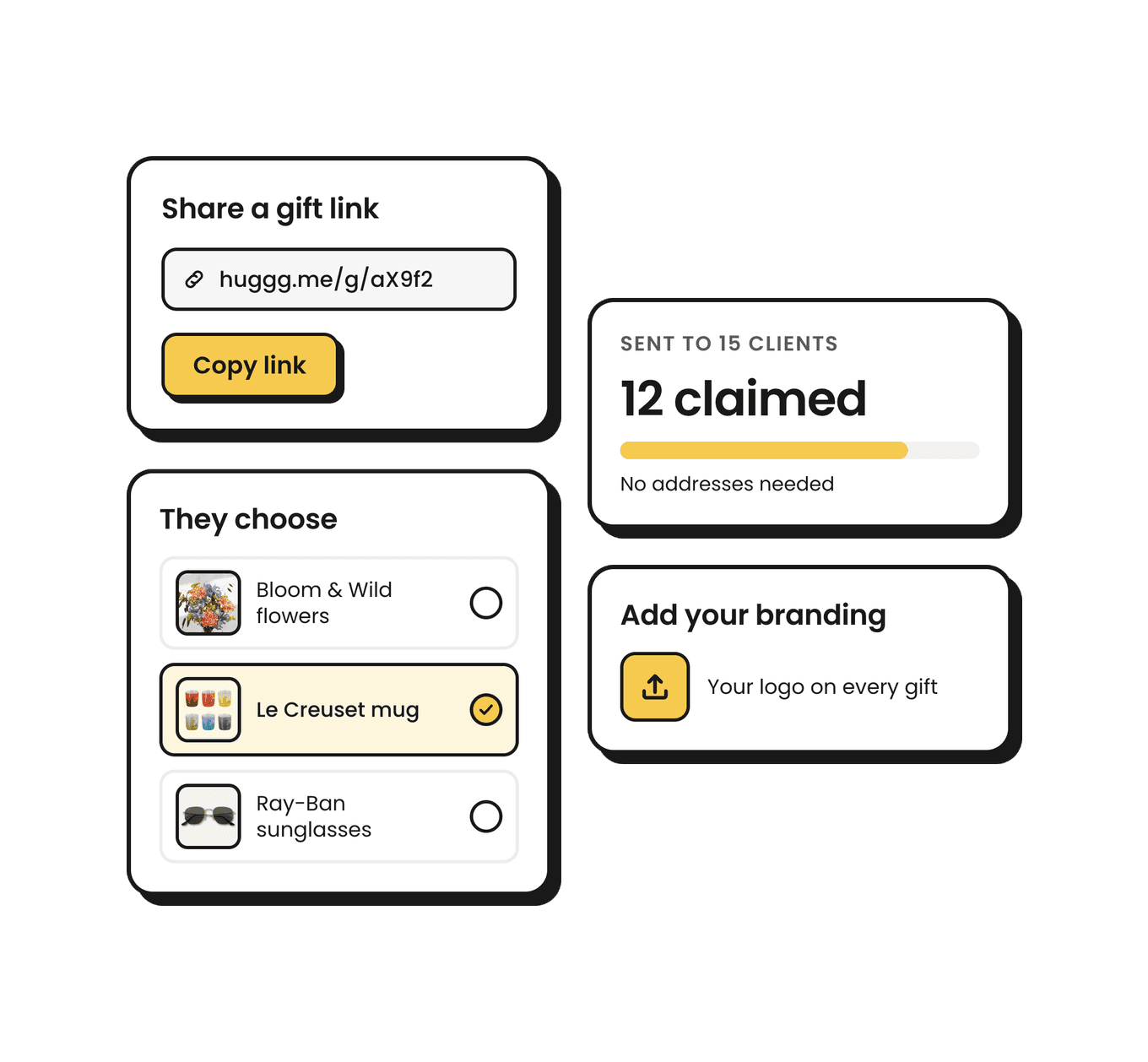
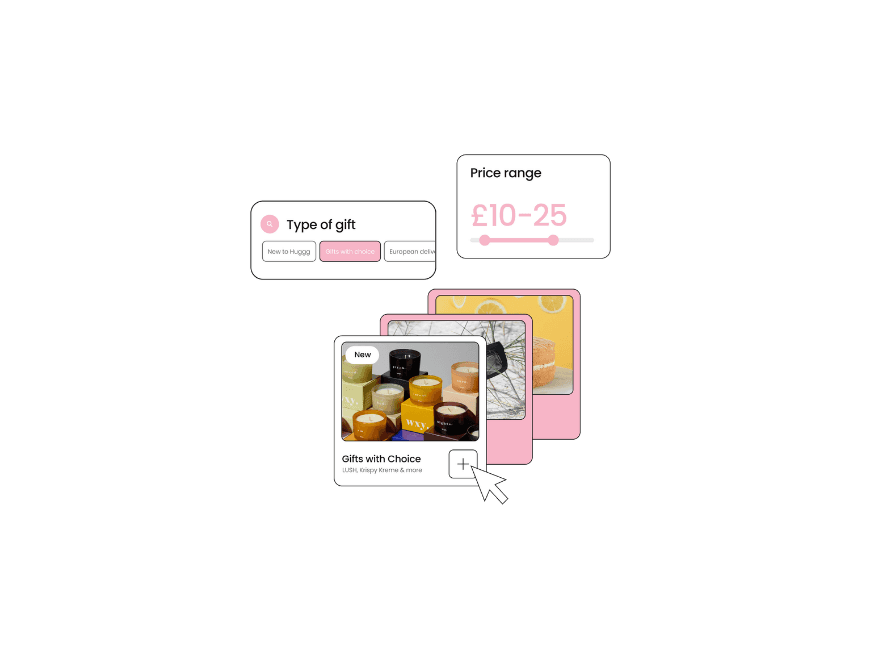
Personalise
Pick the gift, add your message and add some special touches
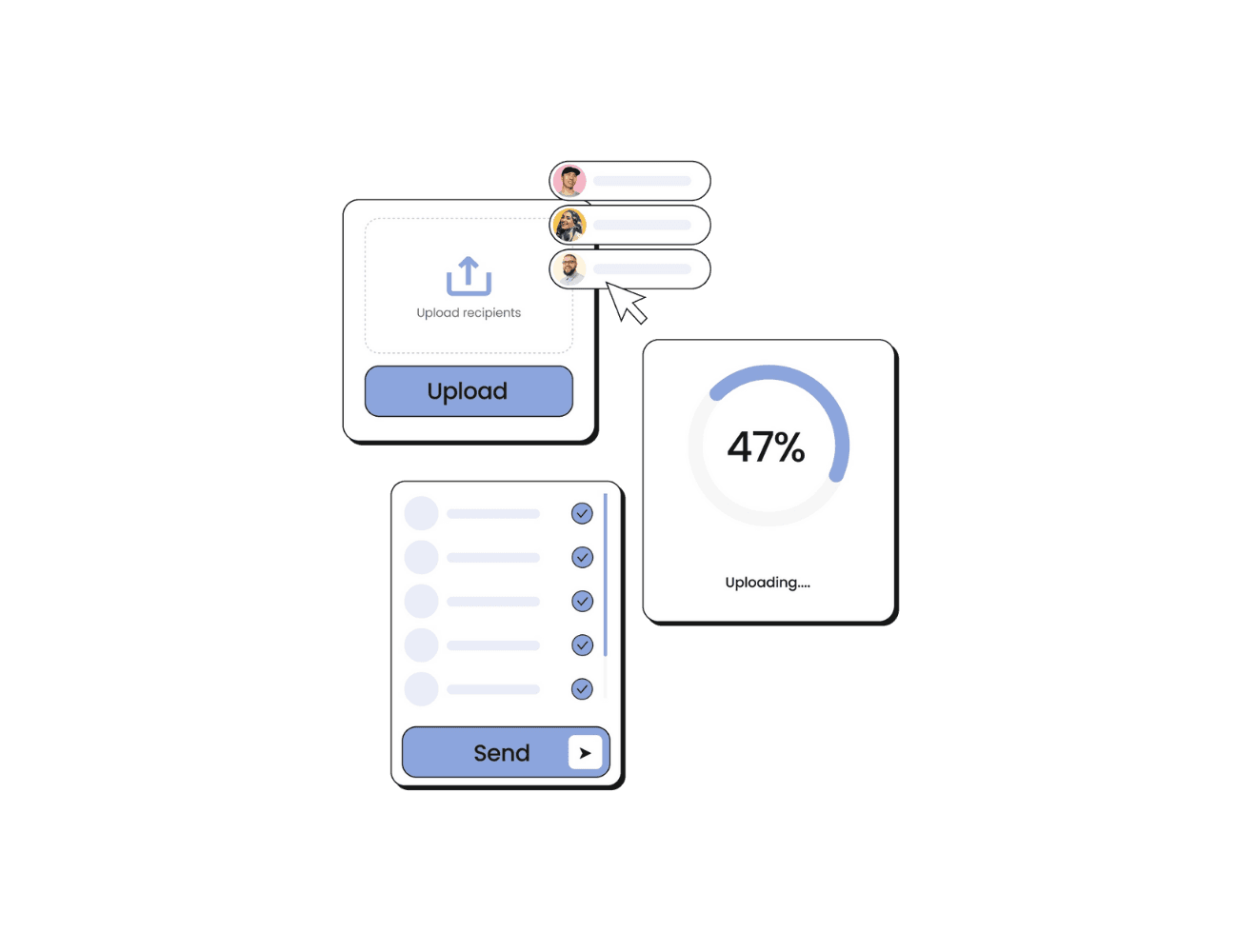
Send
Gifts are sent digitally as a link. You can bulk upload email addresses, use Teams or Slack. It'll take seconds.
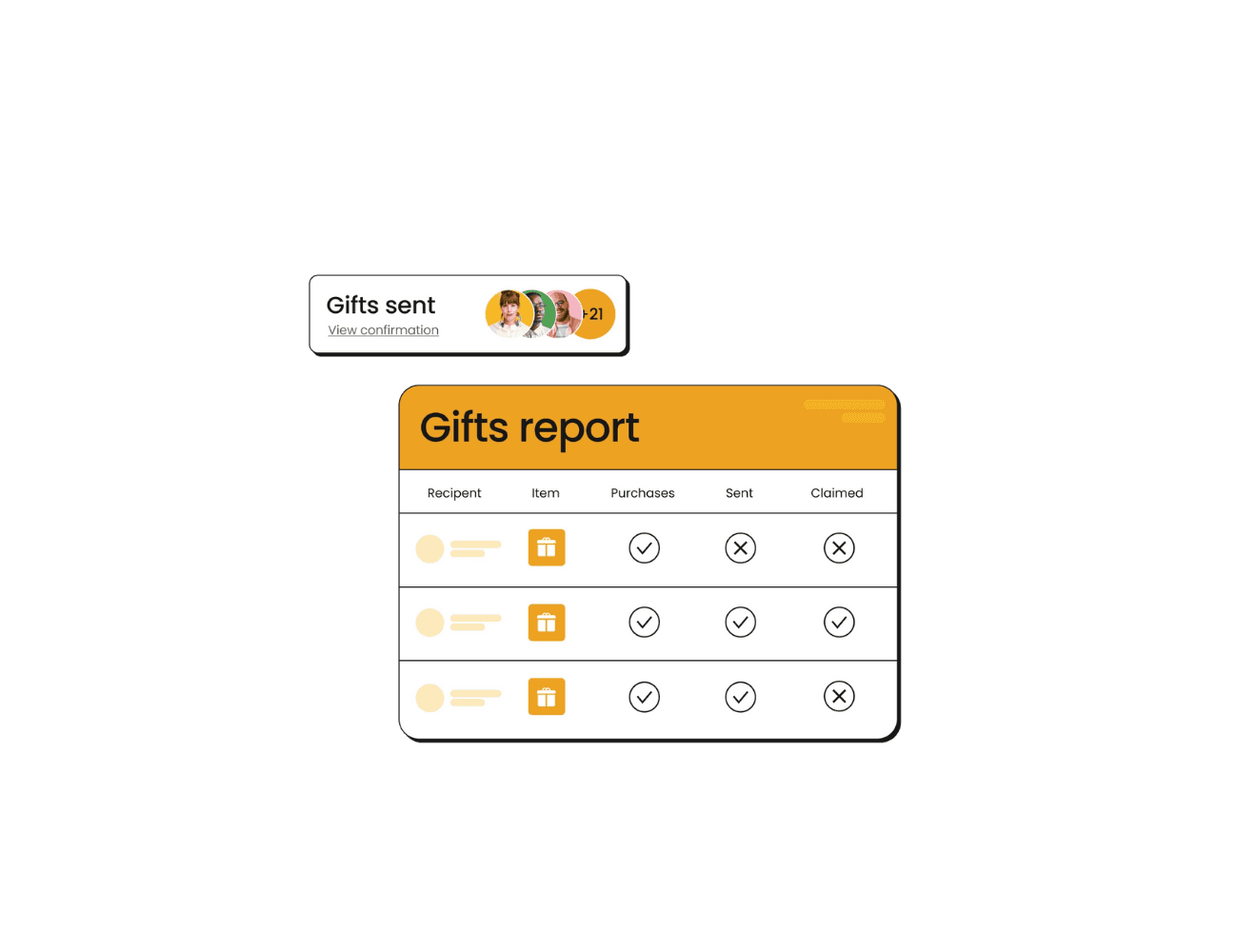
Enjoy
Recipients pick their gift (no prices shown, no login needed). You get instant reports.
"It blew my mind that you can send gifts to entire workforces as quickly as you can to individuals"

"I could not recommend it enough and actually that's why it's expanded - it's always been if I'm looking after a team, that team is being looked after by Huggg as well"

"If you want to save time, if you want to give your people a choice of the recognition they deserve, then there's no other option but to use Huggg."

477
610
110+
79%
84%
£37.56

What do employees actually pick for Christmas?
When every recipient could choose any gift from the Huggg range, the data was clear. Wine came first. A 4-bottle Virgin Wines case was the single most-picked gift of Christmas 2025, with a sparkling bundle right behind it.
After wine, the runners-up were not more chocolate. A Lumie sunrise alarm took third place. YETI water bottles took seventh and eighth. An air fryer crept in at ninth. Hotel Chocolat finally appeared at tenth.
The top ten only accounted for 16% of all picks. The other 84% of recipients chose something from the long tail of 673 different products. Choice is not a preference. It is used.
Newsprinters
Wingstop
Octopus Energy
Christmas gift tax rules for UK employers
Under HMRC rules, a non-cash gift of £50 or less per employee is a "trivial benefit". It is tax-free for both employer and employee, with no national insurance, provided it is not cash, not a reward for performance, and not part of a contract. The £50 cap is per gift, not per year.
What counts: gift cards and specific gifts qualify. Cash and anything exchangeable for cash does not. Most Huggg gifts sit inside the rule when you set the budget at £50 or under.
Directors of close companies have a £300 annual cap on trivial benefits.
Disclaimer (small text) This is not tax advice. Check the position for your business with your accountant or tax advisor. Full HMRC guidance: gov.uk/expenses-and-benefits-trivial-benefits.
Christmas gifting questions, answered
The questions UK HR teams ask us most often.
Are Christmas gifts for employees tax deductible in the UK?
Yes, in most cases. If each gift costs £50 or less per employee, is not cash or a cash voucher, and is not a reward for performance, it qualifies as a "trivial benefit" under HMRC rules. That means no tax and no national insurance for either side.
The £50 limit applies per gift, not per year. So you can give a £50 trivial benefit at Christmas, at Easter, and at any other point in the year, provided each gift sits inside the rules. For directors of close companies, there is a £300 annual cap on trivial benefits. Full guidance is on gov.uk.
This is not tax advice, speak to your accountant.
What is the difference between a gift card and a "gift with choice"?
A gift card lets the recipient spend a fixed amount at one retailer. A "gift with choice" lets the recipient pick a specific gift from a curated selection across many brands. With Huggg's Gift with Choice, the sender sets a budget and the recipient picks what they actually want.
Gift with Choice has higher redemption rates than fixed gifts, because recipients feel ownership over the pick. In 2025, 79% of Huggg's Christmas senders chose Gift with Choice over a fixed gift.
What is the best way to send Christmas gifts to remote employees?
Digital delivery. Send the gift as a link by email, Microsoft Teams or Slack. No postal addresses needed. The recipient opens the link, picks their gift, and Huggg delivers it directly to their home. It works the same way whether your team is one person or ten thousand, in one office or multiple countries. Recipients use the link on phone or desktop. No login, no app download, no friction.
Can you give employees gift cards for Christmas?
Yes. Non-cash gift cards under £50 per person qualify as trivial benefits and are tax-free for both employer and employee. Most Huggg gift cards sit comfortably inside the rule, with single retailer and multi-retailer options available.
Cash gifts and gifts that can be exchanged for cash do not qualify as trivial benefits. Non-cash gift cards do, provided each gift stays under £50 and is not a reward for performance or part of contractual remuneration.
We're not tax experts - get your own advice.
How many Christmas gifts can you send through Huggg?
From a single gift to over 10,000 in one send. No minimum order. No per-recipient limit on the upper end. Pricing is the same per gift whether you send ten or ten thousand. You pay only for the gifts you send.
Can I add my company branding to Christmas gifts?
Yes. You can add your company logo, brand colours and a personal message to the gift experience the recipient sees for an additional cost. For client-facing gifts, branded delivery makes a stronger impression than a generic email. Marketing teams can preview the branded gift experience before sending. Setup takes a few minutes.
Are Christmas gifts for employees tax deductible in the UK?
Yes, in most cases. If each gift costs £50 or less per employee, is not cash or a cash voucher, and is not a reward for performance, it qualifies as a "trivial benefit" under HMRC rules. That means no tax and no national insurance for either side.
The £50 limit applies per gift, not per year. So you can give a £50 trivial benefit at Christmas, at Easter, and at any other point in the year, provided each gift sits inside the rules. For directors of close companies, there is a £300 annual cap on trivial benefits. Full guidance is on gov.uk.
This is not tax advice, speak to your accountant.
How much do UK companies spend on Christmas gifts for employees?
When teams give a genuine choice, the typical spend is £37.56 per recipient, based on Gift-with-Choice redemptions across 477 UK companies sending through Huggg in 2025. Most land between £25 and £50, comfortably inside the £50 trivial benefit limit.
Budgets cluster around the £50 tax-free headroom, and giving people a choice tends to nudge spend up rather than down. Higher budgets (£50 to £75) appear in financial services and law. Lower budgets are common at smaller companies or where client volume matters.
Make this Christmas simpler than last year
Share your details, and we'll be in touch when it's time to get Christmas sorted. One less thing to think about!
